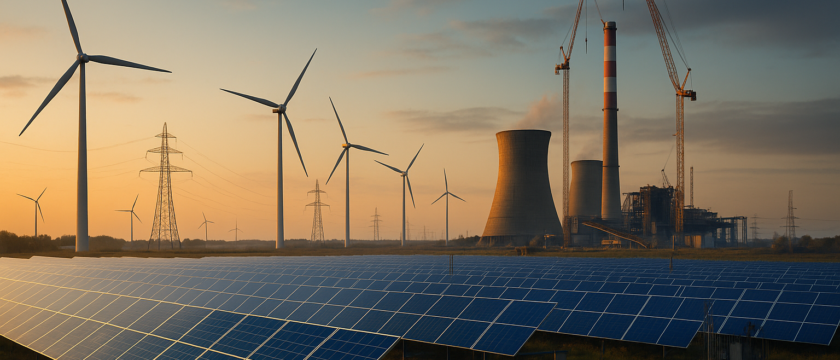
A Turning Point for the Global Energy System
For the first time in history, wind and solar power plants have generated more electricity than coal, marking a major structural shift in the world’s energy balance.
According to a new report by climate think tank Ember, in the first half of 2025, renewable energy sources not only met the increase in global electricity demand but also pushed coal and gas generation into decline.
“Solar and wind are now growing fast enough to meet the world’s growing demand for electricity. This marks the beginning of a transition to clean energy that keeps pace with demand growth,”
— said Malgorzata Wiatros-Motyka, Senior Power Analyst at Ember and lead author of the report.
Key Findings: Renewables Take the Lead
-
Solar power generation rose by nearly 30% year-on-year, accounting for 83% of global demand growth in H1 2025.
-
Wind power output increased by 7%, helping renewables surpass fossil fuels in total electricity generation.
-
Coal and gas consumption both saw slight declines — the first synchronized downturn since before the COVID-19 pandemic.
This turning point demonstrates that the energy transition is accelerating faster than expected, largely driven by massive renewable investments in Asia.
Asia Drives the Transition: China and India Lead the Way
The report attributes most of the progress to China and India, which together accounted for the majority of new clean power generation:
-
China expanded its renewable output more than the rest of the world combined, leading to a 2% decline in fossil fuel consumption compared to the same period in 2024.
-
India tripled its renewable generation while electricity demand grew modestly — causing coal use to drop by 3.1% and gas consumption to fall by 34%.
By contrast, the United States saw electricity demand rise faster than renewable capacity, leading to a 17% increase in coal production in early 2025.
In the European Union, moderate demand growth combined with weather-related drops in wind and hydro output forced an increase in gas (+14%) and coal (+1.1%) generation despite strong solar expansion.
IEA Forecast: Solar to Drive 80% of New Clean Capacity
A parallel study by the International Energy Agency (IEA) projects that by 2030, global renewable energy capacity will more than double, with solar accounting for 80% of new clean installations.
“In the coming years, renewable capacity growth will be led by solar, but also by wind, hydro, bioenergy and geothermal,”
— said Fatih Birol, Executive Director of the IEA.
China is expected to remain the world’s largest renewable market, while India will rise to second place by the end of the decade.
Strong growth is also expected in Saudi Arabia, Pakistan, and Southeast Asia, as countries accelerate solar deployment to diversify their energy mix.
What the Shift Means
-
For investors: Renewables now represent the fastest-growing segment of global energy markets, signaling massive infrastructure opportunities in solar, wind, and grid modernization.
-
For policymakers: The milestone underscores the importance of stable regulatory frameworks and climate-finance mechanisms to sustain momentum.
-
For Ukraine: The global trend reinforces the country’s strategic focus on renewable energy independence, particularly solar and wind, as part of its Energy Strategy 2030.