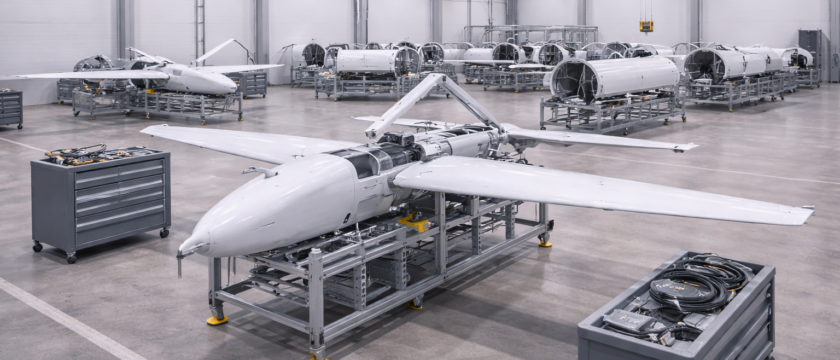
Renault has confirmed it has agreed to cooperate with the defense company Turgis Gaillard on producing drones intended for Ukraine. The project is coordinated by the French Ministry of Defense, and the company says production is planned at two Renault plants, while key contract details remain undisclosed.
For investors, the signal is less about one contract and more about a structural trend: Europe is mobilizing large industrial capacity to scale drone production, and automotive know how is a natural fit for repeatable assembly, cost control, and supply chain management.
What is known and what remains undisclosed
Renault states that drones will be produced at two facilities. The parties are not publicly disclosing contract value, planned volumes, or the specific role of the drones, whether they are reconnaissance, defensive, or strike oriented. Renault leadership frames participation as a response to a state request based on its manufacturing and industrial design expertise.
Why this matters for industrial and capital markets
Drones have become a core capability in modern warfare, so procurement is shifting from small batch improvisation to industrial scaling. That shift creates demand for standardized components, quality control, testing infrastructure, and resilient logistics. If large plants are repurposed even partially, it can also create new order books for tier suppliers that can meet tighter traceability and reliability requirements.
What to watch next
The investable story will depend on execution: which plants will be used, how quickly production ramps, and how supply chains are secured for electronics, composites, and propulsion subsystems. Investors should also watch governance and compliance layers, including certification, export controls, and long term demand visibility across Europe.
- Opportunities: industrial scaling services, tier supply for components, testing and quality systems, secure logistics and warehousing
- Risks: limited transparency on volumes, supply bottlenecks for key parts, regulatory constraints, ramp up delays
- Signals: confirmed plant sites, production cadence targets, supplier ecosystem announcements, multi year procurement frameworks