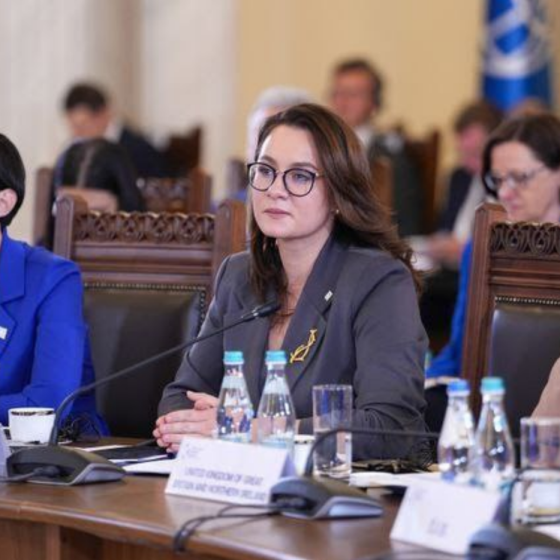
The United Kingdom has announced an additional package of around seventeen million pounds to support green energy projects in Ukraine. The funds will be directed to renewable generation, grid modernisation and technical assistance, reinforcing Ukraine’s strategy to align its energy system with European standards even while the war continues.
For investors, this is not only a political signal but also a practical risk sharing tool. When a G7 government provides capital and expertise, it becomes easier to structure bankable projects in wind, solar and distributed generation.
How the new funding is expected to work
The announced support combines several instruments: direct grants for project preparation and feasibility studies, co-financing of concrete investments and technical assistance for regulators and operators. The focus is on projects that both decarbonise the system and strengthen resilience against attacks on energy infrastructure.
Typical use cases include grid connection for new renewables, modern control systems, storage pilots and upgrades of distribution networks in regions where decentralised generation can reduce blackout risks. British expertise in regulation and market design will be used to help Ukraine fine tune its rules for auctions, balancing and flexibility services.
Why green energy remains an investment theme during the war
Despite ongoing security risks, Ukraine needs to replace lost generation capacity, reduce dependence on imported fuels and prepare for closer integration with the European power market. Green energy is one of the few sectors where long term climate goals, security of supply and investor interest overlap.
Support from the UK makes it easier to bridge the gap between project economics and perceived country risk. By absorbing part of the early stage and political risk, British programmes can help unlock commercial debt and equity for projects that would otherwise remain on hold.
Where the opportunities lie for private capital
For developers and funds, the most interesting segments are likely to be:
- medium scale solar and wind farms in regions with stable grid conditions;
- hybrid projects that combine renewables with storage or cogeneration to support critical infrastructure;
- modernisation of local networks, including smart metering and automated substations;
- industrial decarbonisation projects that link green power supply with new production capacity.
UK backed facilities can provide a framework for blended finance, where grants and guarantees sit alongside commercial money. For Ukraine, each such project is not only additional clean megawatt hours, but also a step towards a more resilient and investable energy system.