


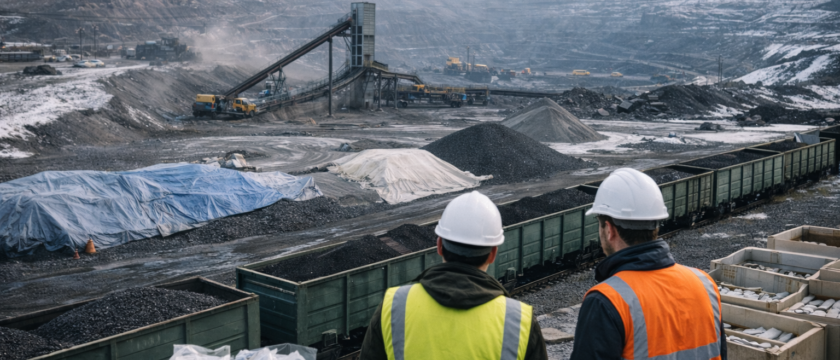
Ukraine remains one of the richest countries in the world by iron ore reserves, which keeps the country in the global top tier for iron ore resources. For investors, this is not only a mining story. It is a supply chain story that links extraction, beneficiation, rail and port logistics, and industrial demand inside Europe.
At the same time, Ukraine has meaningful deposits of manganese, titanium, uranium, lithium, graphite, cobalt, nickel, and rare earth elements such as neodymium, cerium, and scandium. These inputs matter for batteries, electronics, defense systems, and renewable energy equipment, which makes the sector relevant for long term industrial policy and private capital.
Iron ore: scale, exports, and the cost equation
Before the full scale war, the industry produced more than 80 million tonnes of iron ore products in 2021. Output later dropped sharply, but the sector still supplies domestic metallurgy and exports part of production. For 2024, the export volume of iron ore products was reported at 33.6 million tonnes, and sector analysts projected a decline to 27 million tonnes in 2025 due to weaker global demand and stronger competition from suppliers without wartime risk.
- Demand risk:
- Logistics gap:
- Power intensity:
- Working capital:
Critical metals: where value is created or lost
Critical minerals can attract premium valuations only when projects are structured for bankability. That usually means clear licensing, transparent geology data, ESG aligned development plans, and credible offtake routes. Investors also focus on where value is captured: exporting raw material is one model, but processing and downstream components can improve margins and reduce exposure to freight costs.
A practical approach is to evaluate each metal through four lenses: project location and security profile, grid and transport access, processing requirements, and the commercial pathway from concentrate to end user.
Policy signals and investor implications
Ukraine is positioning extraction as part of reconstruction finance. A policy signal mentioned by industry representatives is that a portion of revenues from new mining projects, including rent and license related income, may be directed to a national reconstruction fund. This can strengthen the case for the sector as a budget contributor, but it also increases the importance of stable rules so projects can be financed at reasonable cost of capital.
For investors, the opportunity set goes beyond owning a mine. It includes EPC and modernization, energy efficiency upgrades, rail and port services, and beneficiation capacity that upgrades ore into higher value products. The main constraints remain security, logistics cost, and predictable regulation, so the best strategies are those that combine resilient locations, reliable infrastructure access, and clear commercial endpoints.




