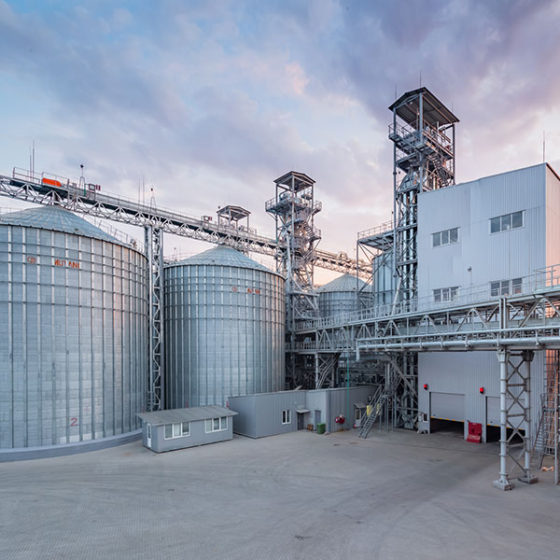
At Ukraine House Davos, Interpipe CEO Luca Zanotti argued that domestic industry should play a leading role in Ukraine postwar recovery, pointing to strong fundamentals such as resource potential, energy resilience and the ability of people and businesses to operate under extreme pressure.
For investors, the message is practical: reconstruction will not scale on aid alone. It requires local production, reliable supply chains and projects that can be executed at speed, with clear rules and stable energy inputs.
Why manufacturing becomes the multiplier
Industrial capacity is a multiplier because it converts demand for rebuilding into local value added: jobs, taxes, export earnings and faster delivery for infrastructure and housing. In war time conditions, the ability to manufacture and repair locally also reduces dependence on long cross border supply routes.
Zanotti used Interpipe as an example of resilience at the company level: operations near the frontline in Nikopol, diversification of products and markets since the start of the war, and continued investment in production capacity.
Policy levers that can unlock private capital
Investors should focus on the enabling environment, not only on single projects. Zanotti highlighted the logic of policies that keep value added inside the country, such as restrictions on scrap exports. He also emphasized that rapid EU accession would open a second domestic market for Ukrainian producers and support recovery through scale and rules alignment.
Another critical layer is decarbonization. Interpipe positions its steelmaking modernization and emissions performance as competitive advantages. For investors, lower carbon intensity and transparent reporting become essential as Europe tightens carbon related requirements in trade and procurement.
Risks and what to monitor in 2026
The core risk remains security and infrastructure disruption, which affects operating continuity, logistics and energy. A second risk is the speed of integration into European frameworks and the consistency of domestic policy, which determine whether financing terms become more standardized and bankable.
- Drivers: reconstruction demand, import substitution, export recovery, localization of value chains
- Key enablers: predictable energy policy, workable risk sharing tools, faster EU market access, stable industrial rules
- Main risks: security shocks, power constraints, logistics bottlenecks, policy reversals
- Investor opportunities: industrial services and EPC, equipment supply, energy efficiency and grid resilience, decarbonization capex, regional manufacturing clusters