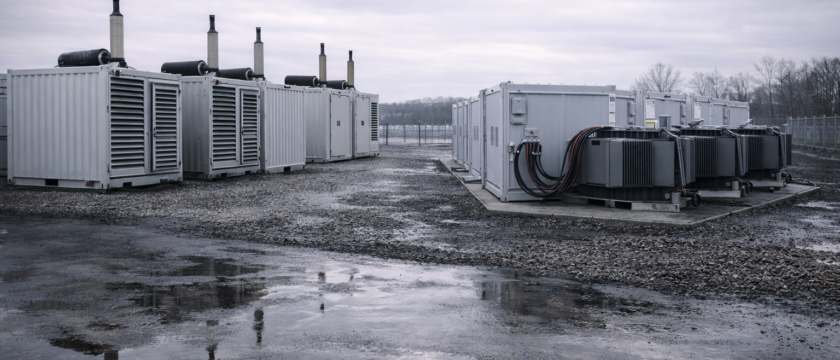
Concorde Capital plans to commission 18.4 MW of gas engine generation in early 2026 through its Encraft platform focused on distributed generation and energy storage. The logic is straightforward: when the system faces capacity gaps and volatile prices, flexible assets that can be deployed quickly tend to earn attractive revenues and become targets for strategic buyers.
Why distributed gas engines can be a fast resilience asset
Gas engine plants are typically modular, faster to build than large thermal projects, and useful for peak and balancing needs. In an electricity market shaped by outages, congestion, and price swings, smaller nodes of generation can reduce local stress and monetize short windows of scarcity. This is especially relevant when demand for balancing power grows alongside variable generation and changing consumption patterns.
Battery storage: the value is in flexibility, not only megawatts
Concorde Capital also intends to scale storage by the end of 2026 to up to 40 MW with total energy of 160 MWh across multiple regions. Storage can capture several value streams: intraday arbitrage, balancing services, fast response capacity, and support for local reliability. In markets with high volatility, the ability to respond within seconds can be monetized even when average prices are moderate.
The investment model: build to sell with structured co investment
The group describes itself as an anchor investor that structures financing, attracts partners, and exits by selling a completed asset. This resembles an infrastructure style build-to-sell approach: developers take early execution risk, then recycle capital once a plant is commissioned and contracts or revenue history support valuation. The platform is presented as open to co investment for private and institutional investors seeking exposure to Ukraine energy during recovery.
Key risks to model before writing a check
- Gas supply and price risk, including fuel logistics during winter peaks
- Grid connection timelines and constraints that can delay revenue start
- Market rule changes for balancing and storage participation
- Counterparty risk and settlement discipline in power markets
- Physical security and operational continuity under wartime conditions
If the projected deficit and volatility persist through at least 2029 as stated by the project owner, flexible capacity remains investable. For investors, the practical test is execution: commissioning on time, measurable dispatch or balancing revenues, and a clean pathway to an exit to a utility, IPP, or infrastructure fund.