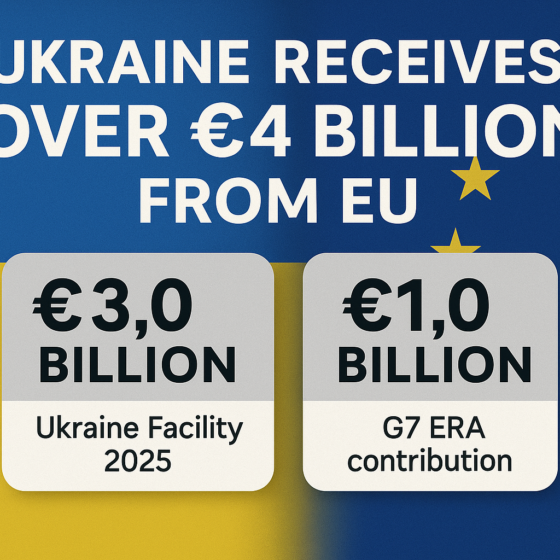
New EU Support for Ukraine
On September 12, 2025, the European Commission announced an additional €40 million in humanitarian assistance to help Ukrainians endure the fourth winter of Russia’s full-scale war.
The funding aims to strengthen winter preparedness, protect civilians from extreme cold, and mitigate the effects of damaged energy infrastructure.
What the Aid Includes
The package will be channelled through EU humanitarian partners and will cover:
-
Shelter materials and repair of damaged homes and displacement centres.
-
Heating support, including solid fuel, stoves, insulation materials, and the setup of heating points.
-
Access to water and sanitation, ensuring communities can cope with winter disruptions.
-
Cash assistance to vulnerable families for urgent needs.
👉 Special focus is placed on the elderly, children, people with disabilities, and displaced households.
Broader EU Humanitarian Efforts
This latest allocation builds on the EU’s large-scale assistance:
-
156,000+ tonnes of humanitarian aid delivered via the EU Civil Protection Mechanism.
-
9,342 generators and 6,917 transformers provided, alongside millions of LED energy-saving bulbs.
-
Over €4.2 billion mobilised in humanitarian aid for Ukraine and neighbouring countries since 2022.
-
Medical evacuation of 4,500+ patients to hospitals across 22 EU member states.
International Contributions
In parallel with EU efforts:
-
The UK announced £142 million in winter assistance.
-
Norway confirmed support for Ukraine’s gas supplies ahead of the cold season.
Strategic Perspective
The €40 million package is more than emergency aid — it’s an investment in resilience:
-
Helps stabilize communities during winter, reducing outmigration and humanitarian crises.
-
Supports energy resilience, complementing EU recovery projects and infrastructure aid.
-
Demonstrates sustained solidarity with Ukraine during prolonged conflict.