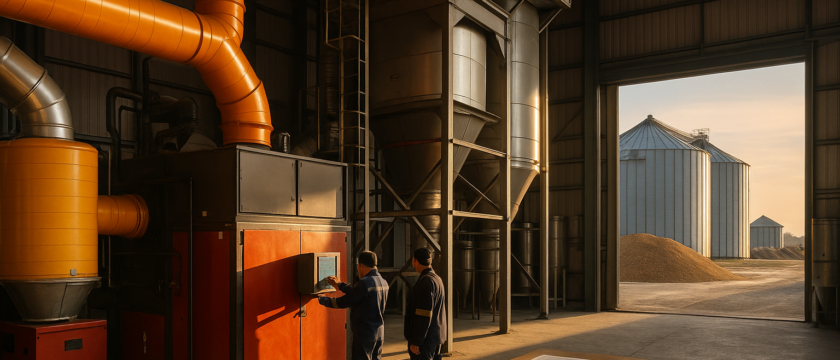
Greco Group, a Ukrainian manufacturer of automatic solid fuel heat generators for grain dryers, has launched full scale serial production of units equipped with a convective heat exchanger. The company is shifting from piece by piece engineering to standardised modules, making it easier to roll out energy efficient drying systems across elevators and agro holdings.
According to Greco Group CEO and founder Ivan Korzhenko, the new convective heat exchanger was engineered and tested to eliminate any harmful impact on grain quality. The design prevents direct contact between flue gases and product, while keeping the system simple to operate and maintain. At the same time, the heat generators are deeply integrated into the control systems of modern grain dryers, giving operators full real time visibility of temperature, draft and fuel use.
Technology tailored to Ukraine s grain drying market
The new line of heat generators targets a wide range of grain dryers with capacities from several megawatts up to large industrial installations. Using solid fuels such as wood chips and agricultural residues, Greco Group systems allow elevators to cut gas consumption, reduce exposure to volatile energy prices and improve energy independence.
The convective heat exchanger is designed so that the unit does not need to be stopped for cleaning. This minimises downtime during peak drying periods and protects throughput at the elevator. The exchanger also cannot burn through under normal operating conditions, which reduces unplanned repairs and extends service life. In combination with modular construction, this simplifies maintenance and makes it easier to scale service operations across dozens of sites.
Positioning for European norms and export potential
Greco Group emphasises that its equipment is designed with stricter European environmental and product quality norms in mind. The convective scheme avoids contamination of grain by combustion products, a key requirement for exports to demanding markets. For agro holdings and elevator operators preparing for deeper integration with EU supply chains, installing modern solid fuel systems becomes part of a broader decarbonisation and competitiveness strategy.
Serial production also opens the door to exports of Ukrainian made equipment. A standardised product line, reproducible manufacturing processes and predictable delivery times are prerequisites for building dealer networks in neighbouring markets and offering turnkey packages together with dryer suppliers.
Business model and financing logic
The company s focus on modular, serially produced equipment supports a more scalable commercial model. Standard modules reduce engineering time per project and allow Greco Group to accumulate experience across hundreds of installations, optimising performance and service packages. For clients, this translates into shorter lead times, easier integration with existing dryers and clearer benchmarks for fuel savings.
From a financing perspective, the economics are driven by the spread between gas and biomass, combined with high utilisation of the dryer during harvest. Payback periods in favourable cases are measured in a few seasons. For banks and leasing companies, serial production with a proven track record reduces technical risk and makes it easier to structure credit lines secured by the equipment.
What it means for investors
For strategic investors, Greco Group illustrates how Ukrainian engineering companies can build export ready industrial products around the country s agro value chain. The combination of energy security, decarbonisation and cost savings creates a resilient demand base among elevators and agro holdings.
Equity and debt investors looking at the agro and energy efficiency segment in Ukraine can consider several angles: direct participation in equipment manufacturers like Greco Group, project financing for elevator modernisation, or partnerships that package heat generators together with grain dryers, storage and digital control systems. As serial production ramps up, the company s ability to lock in long term service contracts and enter new markets will be key value drivers.