A year into Donald Trump’s second term, Ukraine’s business environment has absorbed a new kind of external risk: higher policy volatility from the United States combined with sharper bargaining pressure around war outcomes. For investors, this matters less as a headline and more as an input into discount rates, insurance decisions, and the timing of capital deployment.
At the same time, Ukraine’s economy continues adapting through decentralised resilience: distributed energy solutions, faster defence industrial output, and a growing role for EU-linked logistics and procurement. The net result is a market where project selection and risk structuring now matter as much as the underlying sector thesis.
What changed in the risk landscape
The most material shift was the uncertainty premium. When Washington signals change frequently, counterparties demand larger buffers: shorter contract durations, stronger collateral, tighter milestone-based funding, and more conservative assumptions on security and continuity of operations.
This does not freeze investment, but it reorders it. Projects with clearer cash-flow visibility and stronger EU integration pathways tend to move first, while long-gestation bets need more guarantees and stronger partner syndicates.
Why the investor view should stay practical
Ukraine remains a wartime economy, so investor logic is about managing probabilities rather than predicting politics. The smartest approach is to build scenarios and price them: a base case of continued European support with fluctuating US posture, a downside case of delayed external funding, and an upside case where security assistance stabilises and reconstruction pipelines accelerate.
Across scenarios, the same operational questions dominate: access to power, logistics redundancy, staff safety protocols, and contractual protections that withstand disruption.
Where opportunities still look investable
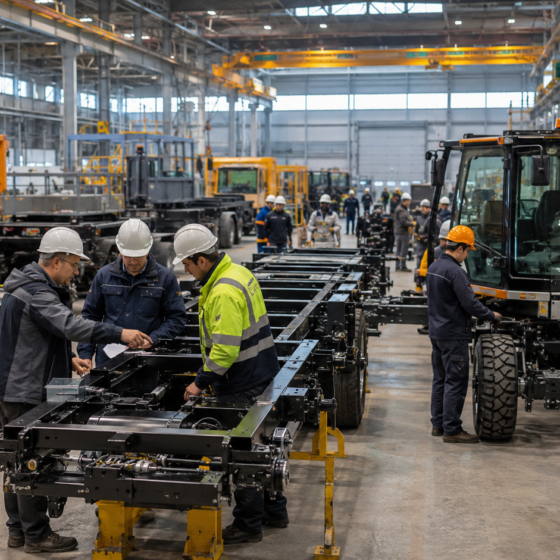
Even under elevated geopolitical noise, several areas remain investable because demand is structural: distributed energy and grids, defence-adjacent manufacturing and maintenance, export logistics, and agro-processing that reduces transport of raw volumes. In each case, the winning model is local execution paired with external finance that is staged, insured, and compliance-ready.
- Drivers: structural demand in energy, logistics, and defence-adjacent industry; deeper EU integration; operational learning curve
- Risks: higher policy volatility, slower external funding cycles, security disruption, insurance and freight cost swings
- Opportunities: milestone-based project finance, export infrastructure, distributed energy, industrial partnerships and localisation