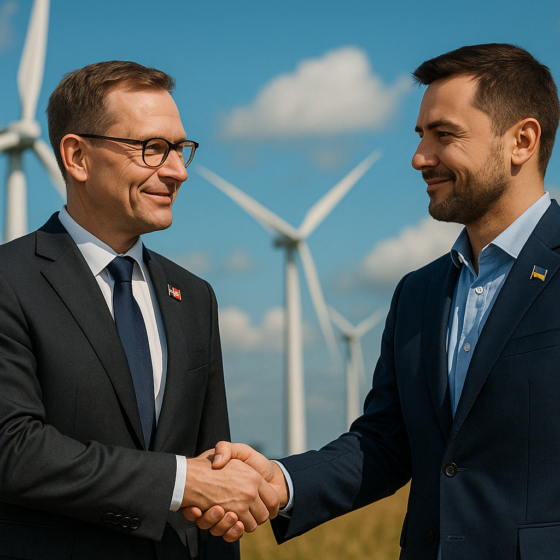
Denmark is turning from a donor of military aid into a full scale industrial partner for Ukraine. The government has authorised Ukrainian defence company Fire Point to place rocket fuel production on Danish territory, near the Skrydstrup air base in southern Denmark. The plant in Vojens is expected to start operating in 2026 and will supply fuel for Ukrainian missiles and drones.
First NATO country to host Ukrainian defence production
This is the first case in NATO where a member state not only finances weapons for Ukraine, but also opens its own territory to Ukrainian defence manufacturing. Earlier, Kyiv and Copenhagen signed a framework agreement and Denmark earmarked about DKK 500 million (around $80 million) to launch Ukrainian arms production in the country. Now the decision has a concrete industrial embodiment: a specialised rocket fuel facility built and operated by a Ukrainian company.
For Ukraine this is a way to diversify production away from the reach of Russian missile strikes, while keeping technological control in Ukrainian hands. For Denmark it is an investment in a long term partnership that strengthens NATO’s defence industrial base and secures access to Ukrainian know how in missiles, drones and propellants.
Strategic logic for investors and defence partners
The Vojens plant fits into a broader trend in Europe: allies are not only delivering finished weapons, but also localising Ukrainian production capacity inside the EU and NATO. This reduces logistical risks, shortens supply chains and allows continuous ramp up of output independent of political cycles. In practice this means new contracts for engineering, construction, energy, logistics and safety systems around the plant.
International investors and defence contractors can look at the project as a pilot model for future joint ventures: a Ukrainian technology owner, a host NATO country that provides regulatory and financial support, and a guaranteed end customer — the Ukrainian Defence Forces and allied states financing supplies for Ukraine. Similar clusters may appear in other European countries as demand for ammunition, missiles and UAVs remains elevated for years.
From one plant to a wider defence industrial cluster
If the Vojens project is implemented on time and shows stable output, Denmark can position itself as a northern hub for Ukrainian defence technologies — from rocket fuel and propulsion components to drones and precision munitions. For Ukraine this is also a political signal: partners are ready to embed Ukrainian industry into their own territory and supply chains, not only sign short term aid packages.
For businesses, this creates a window of opportunity to enter a still forming ecosystem around Ukrainian defence production in Denmark: specialised construction, engineering services, safety and environmental compliance, industrial IT, logistics and maintenance. Those who build relationships with Ukrainian manufacturers and Danish authorities now will be better placed to participate in next waves of joint projects.