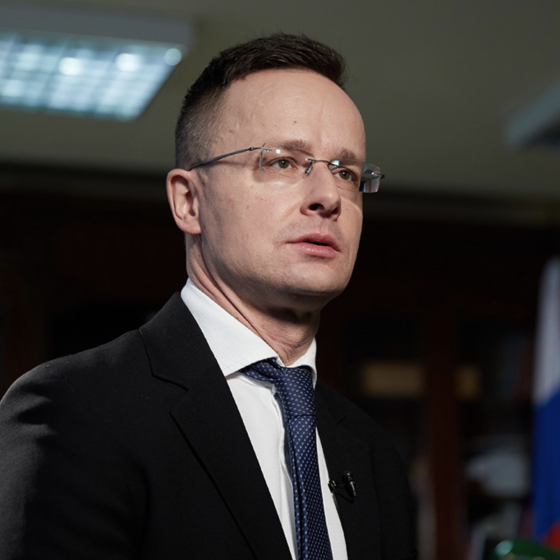
On October 22 in Tokyo, Ukraine’s Minister of Economy, Environment and Agriculture Oleksiy Sobolev met with the leadership of the Japan Bank for International Cooperation (JBIC) to expand bilateral cooperation across energy, industry, agriculture, and investment mobilization. The discussion centered on dedicated credit lines, enhanced risk insurance, and co-financing structures to accelerate Ukraine’s economic recovery and supply-chain rebuild.
Priority Pillars of Cooperation
1) Energy Resilience and Localization
-
Dedicated JBIC credit line with extended risk insurance to finance projects in power generation, grid stability, and storage.
-
Targeted imports of Japanese equipment (batteries, gas turbines, power electronics) paired with technology transfer for localized production in Ukraine to deepen supply security and create skilled jobs.
2) Investment Attraction via Reforms
-
Technical assistance to advance privatization and public-private partnerships (PPP)—aimed at bankable pipelines and predictable concession frameworks.
-
Objective: unlock Japanese private capital for large-scale, revenue-generating projects with clear regulatory guardrails.
3) Agriculture, Logistics, and Processing
-
Joint financing for modern logistics hubs, processing centers, and cold-chain facilities to reduce post-harvest losses and lift export competitiveness.
-
Project origination and screening to be coordinated with UkraineInvest to align investor interest with national priorities.
4) Humanitarian Demining Finance
-
Development of financial mechanisms to de-risk and fund demining of agricultural lands, enabling safe cultivation and rapid yield recovery in affected regions.
5) Critical Minerals with DFC Coordination
-
Exploration of investments in titanium and lithium value chains, in coordination with the U.S. International Development Finance Corporation (DFC)—supporting diversified, allied supply of strategic inputs for energy and aerospace.
6) War-Risk Insurance Expansion
-
Scaling war-risk insurance to crowd-in private lenders and corporates; essential to lower cost of capital and enable long-tenor project finance.
Financial Instruments Under Consideration
-
JBIC credit lines for sovereign, sub-sovereign, and corporate borrowers with enhanced insurance.
-
Co-financing with IFIs and export credit agencies to blend concessional elements with commercial tranches.
-
PPP structures anchored by availability payments or user fees, supported by reform-linked technical assistance.
-
Project preparation facilities to fund feasibility studies, ESIA, and bankable structuring.
Sectoral Implications for Investors
-
Energy/Utilities: Near-term capex in generation, flexibility assets, grid hardening, and storage; medium-term upside from local manufacturing of components.
-
Agri-value chains: Bankable opportunities in refrigerated logistics, processing capacity, and export terminals; resilience plays tied to food security.
-
Industry/Localization: Strong case for import substitution and OEM partnerships with Japanese firms; potential industrial parks focused on energy-efficient production.
-
Critical Minerals: Upstream and midstream projects in titanium/lithium with allied offtake; emphasis on ESG, traceability, and processing in-country.
-
Insurance/Finance: Expanded war-risk and political-risk cover reduces hurdle rates, enabling syndicated loans and green bonds tied to recovery KPIs.
Implementation Watchpoints
-
Policy cadence: Sequencing of privatization/PPP reforms, tariff frameworks, and localization incentives.
-
Risk-sharing terms: Scope of guarantees and insurance; clarity on claims, exclusions, and tenor.
-
Project pipeline readiness: Quality of feasibility studies, land access, permitting, and interconnection timelines.
-
Local capacity: Workforce development for grid, storage, and advanced manufacturing; supplier accreditation for Japanese QA standards.
Outlook
JBIC’s readiness to back large projects in green energy, industry, and logistics—combined with reform support and expanded risk insurance—signals a scalable pathway for Japanese public and private capital into Ukraine through 2027 and beyond. For investors, the emerging toolkit—credit lines, PPPs, and co-financing with risk cover—improves visibility on returns, timelines, and downside protection, positioning Ukraine’s recovery as a bankable, internationally anchored investment thesis.