Key Points at a Glance
-
40 %+ of weapons on the front now made in Ukraine
-
Hundreds of thousands of drones to be supplied through a new U.S. partnership, with even larger volumes projected for 2026
-
Europe channels frozen Russian assets to fund ammunition and equipment for Ukraine
-
Domestic output potential: up to 10 million drones per year, according to Defense Minister Rustem Umerov
-
Joint-production deals advancing with U.S. and German defense firms, backed by co-investment and financing
1. Rapid Expansion of Ukrainian Production
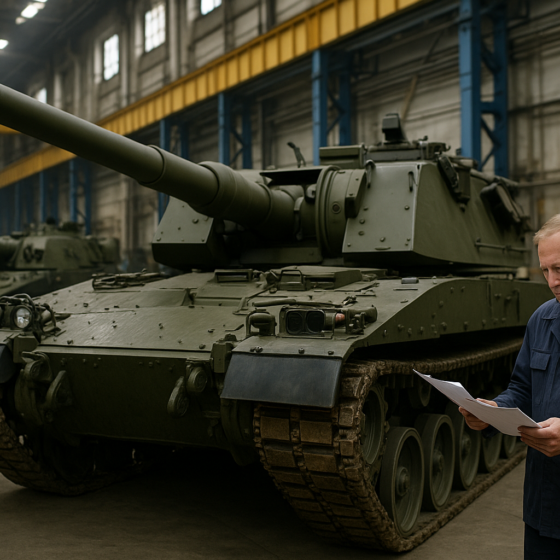
President Volodymyr Zelenskyy reports that locally manufactured systems already account for more than 40 percent of front-line weaponry. Current priorities include:
-
Long-range precision weapons
-
Interceptor drones
-
Artillery systems, armored vehicles, mines, and ammunition
The focus on advanced technologies aims to deter Russian attacks and better shield the civilian population.
2. New U.S. Drone Agreement
An agreement between Ukraine’s Ministry of Defense and a leading U.S. defense company will deliver:
-
Hundreds of thousands of drones in 2025
-
A significantly larger drone supply in 2026
-
Specialized interceptor drones to counter incoming threats
3. European Financing: Russia Pays the Bill
European Commission President Ursula von der Leyen confirmed:
-
Delivery of 2 million artillery shells to Ukraine by year-end
-
More than €2 billion invested in Kyiv’s defense, sourced from the profits of frozen Russian assets
Denmark, which currently chairs the EU Council, is exploring additional investment mechanisms that tap into those same frozen funds.
4. Industrial Capacity and Allied Partnerships
| Partner | Planned Contribution | Status |
|---|---|---|
| United States | Joint drone production and advanced weapons supply | Agreement signed |
| Germany | Co-finance and co-produce long-range fire systems in both countries | First systems due in coming months |
| European Union | Large-scale ammunition funding via Russian asset proceeds | Ongoing allocations |
Defense Minister Rustem Umerov states that, with adequate capital, Ukrainian factories can scale drone output to 10 million units annually.
5. Strategic Outcomes
-
Enhanced battlefield resilience: A diversified, local supply chain reduces dependence on external deliveries.
-
Economic stimulation: Co-investment and joint ventures create high-tech jobs and deepen industrial know-how.
-
Deterrence credibility: A steady flow of long-range weapons and interceptor drones raises the cost of aggression for Russia.
-
Allied solidarity: Redirecting Russian asset proceeds to Ukrainian defense underscores Europe’s commitment to Kyiv’s security.
6. Looking Ahead
-
Short term (2025): Ramp up domestic artillery, drone, and ammunition production; finalize additional joint-production contracts.
-
Mid term (2026): Bring first German-financed long-range systems online; expand interceptor-drone fleets.
-
Long term (2027+): Achieve full-scale co-manufacturing with U.S. and European partners, positioning Ukraine as a major defense-industrial hub.
Bottom Line
Ukraine’s blend of homegrown innovation and allied financial muscle is rapidly reshaping its defense-industrial complex—strengthening national security, boosting economic resilience, and sending a clear message that Kyiv will not accept limits on its right to defend itself.