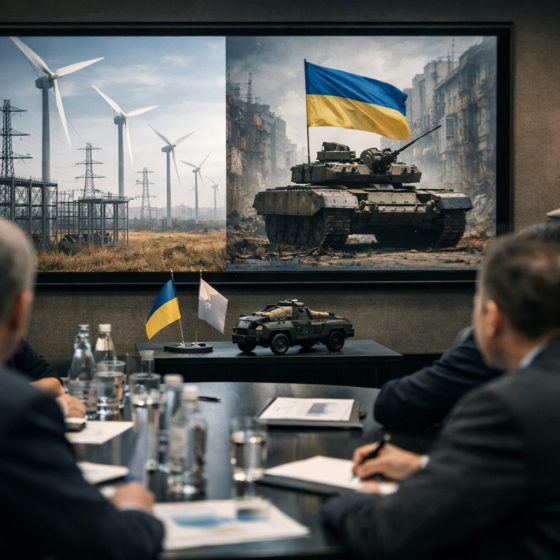
Ukraine is calling for changes to international nuclear safety standards so they reflect risks created by war, occupation and attacks near civilian nuclear facilities. Energoatom specialists argue that current IAEA standards and the nuclear non-proliferation framework do not fully cover scenarios in which nuclear sites are seized, threatened or operated under military pressure.
The company has submitted proposals to a working document connected with the 2026 Review Conference of the Treaty on the Non-Proliferation of Nuclear Weapons, which is taking place in New York. The goal is to strengthen the Convention on Nuclear Safety and create a separate international mechanism for protecting civilian nuclear objects in wartime conditions.
Why Ukraine’s experience matters
Ukraine’s argument is based on direct wartime experience. The existing global safety architecture was built mainly around technical accidents, operational discipline, radiation monitoring and emergency response. It was not designed for the prolonged armed occupation of a nuclear facility, the presence of military equipment around sensitive sites or repeated attacks on nearby energy infrastructure.
The issue has become more urgent as drone activity near Ukrainian nuclear power plants has increased. The IAEA received information about a significant rise in unmanned aircraft activity near Ukrainian nuclear facilities, including reports of more than one hundred sixty drones around the South Ukraine, Chornobyl and Rivne nuclear power plants on May 13 and 14.
For Ukraine, updating the rules is not only a legal matter. It is also about reducing uncertainty for operators, inspectors, governments and international organizations during crises. Clearer standards could define responsibilities, emergency coordination, monitoring access and international response when civilian nuclear assets are exposed to military risks.
If adopted, Ukraine’s proposals would push the nuclear safety debate beyond peacetime assumptions. That could matter not only for Ukraine, but also for any country whose critical energy infrastructure may face hybrid attacks, drone threats or military coercion in the future.